AGI to ASI plant RSI metaphor
Vibing with Gemini to illustrate a plant-based metaphor for recursive self-improvement from AGI to ASI.
AI, energy, and radio from the UK
Personal notes, sketches and experiments on agentic AI, energy systems and amateur radio. Newer ideas sit at the top.
Vibing with Gemini to illustrate a plant-based metaphor for recursive self-improvement from AGI to ASI.
Spinning the wheel of SALAI 3 creativity.

AI isn’t here to replace the driver, it’s an accelerator. You still steer, shift gears, and pick the destination, it's just faster! (IMHO)
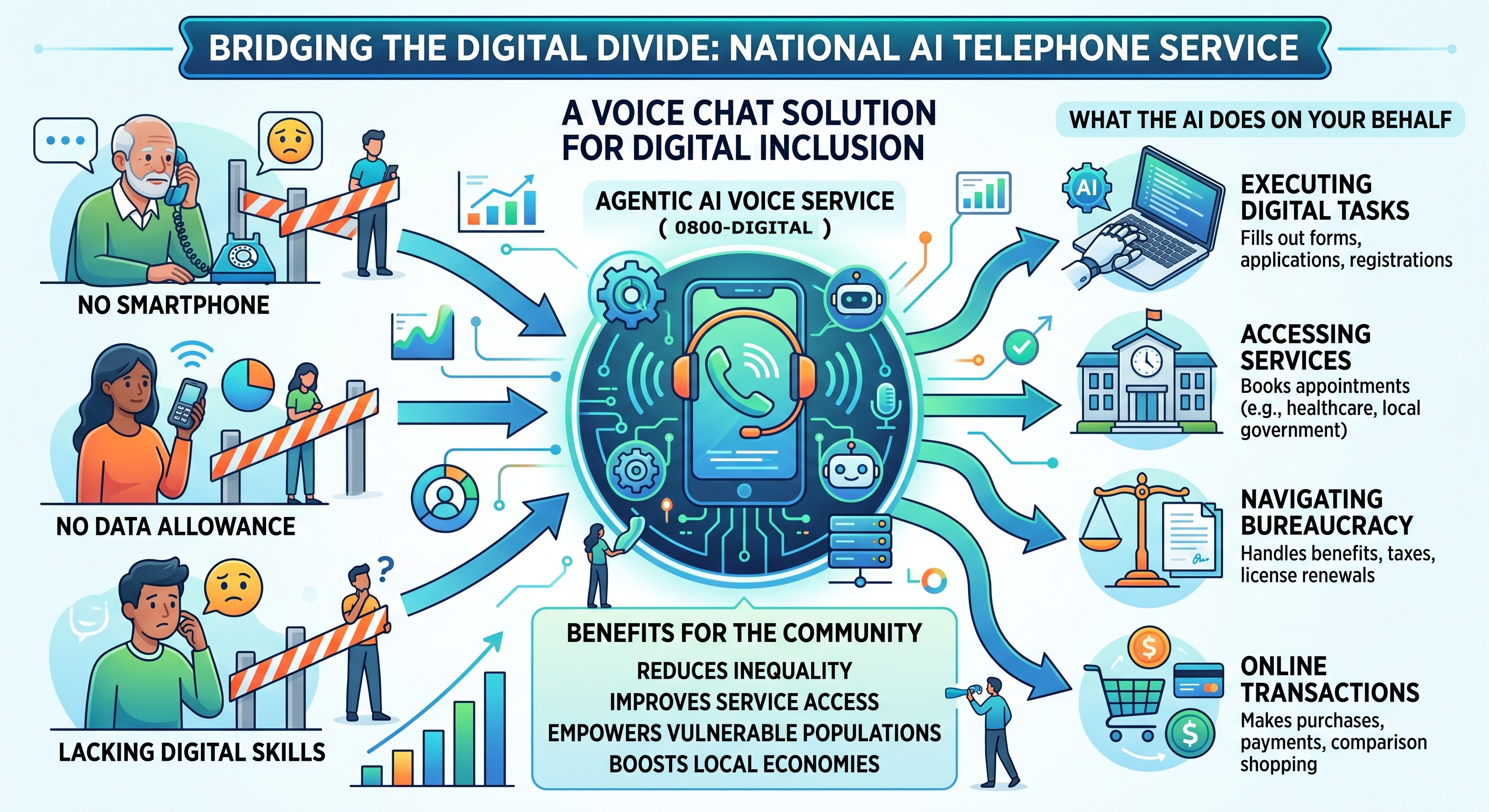
The Concept. A single, free national telephone number backed by Agentic AI that acts as a digital proxy. No apps, no touchscreens, no broadband required. A user picks up any phone, dials, and speaks to an AI voice agent that listens, understands context, and executes digital tasks directly on the web on their behalf.
Real-world use cases
Why this bridges the digital divide
We don’t need to train every citizen to work with a keyboard and mouse. We have the technology (with voice AI) to make computers communicate like humans. (IMHO)
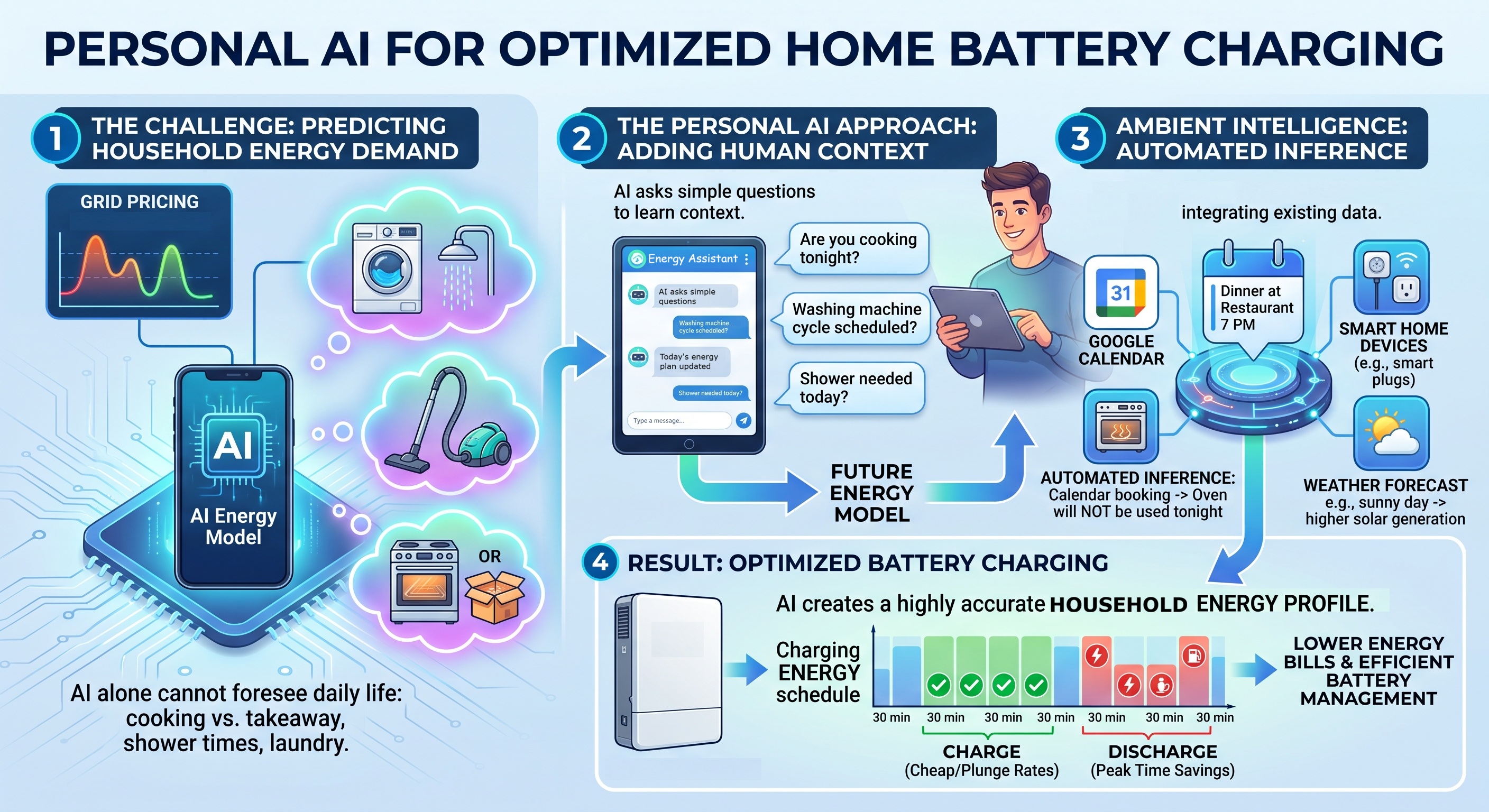
To design and implement a smart home energy management architecture that predicts human-driven household demand with high accuracy, optimizing battery storage charging cycles against dynamic grid pricing.
This might be doable in a quite simple and straightforward way using OpenClaw as the personal AI engine?
Experimenting with satire using the latest Grok Imagine generation engine.
What happens when you map traditional Agile ceremonies onto autonomous multi-agent AI workflows?
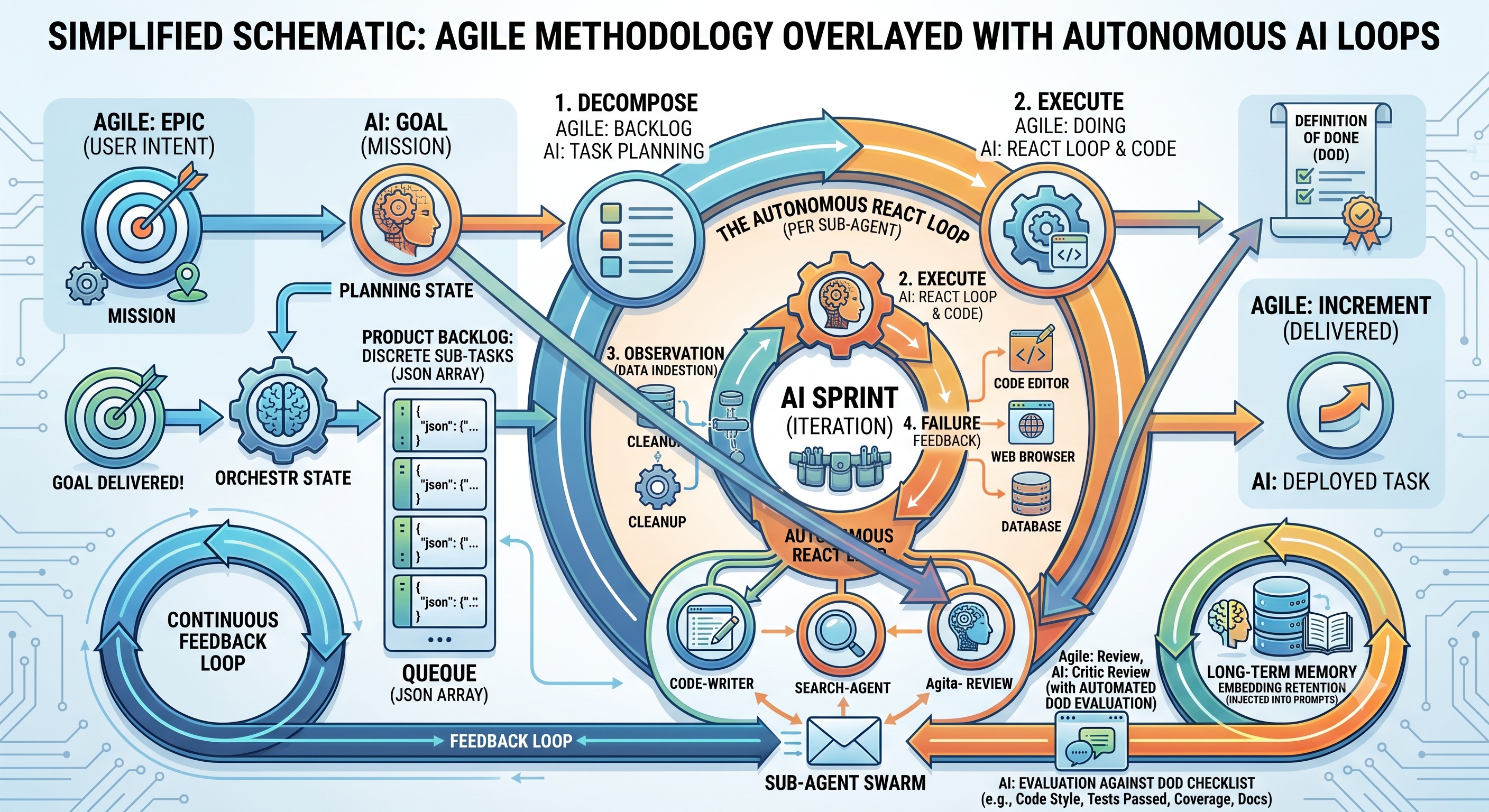
As the industry shifts rapidly towards an agentic software development lifecycle, we need a robust framework to govern how LLMs execute complex goals. This schematic illustrates an “Agentic-Agile” approach, bridging proven Agile process values with the autonomous execution of AI agents.
By replacing human ceremonies with automated state-transfers—such as using an adversarial Critic Agent to strictly enforce the “Definition of Done”—we can create a structured, self-correcting inference engine. In this new paradigm, the skill required to write a good user story becomes exactly the same skill required to write a robust system prompt.
Have you ever wondered how Autonomous AI Agents actually process complex tasks? It is a lot like scanning the bands and cutting through the static to lock onto a clear signal. To break down this architecture, I put together a quick visual analogy.
Here is a walk-through of the process shown in the video:
The Setup: Defining the Epic. The Goal: the video opens with my digital avatar handing down a specific, high-level goal—the “Epic”—to the AI Boss (the Orchestrator). The objective is simple: “Tune the Radio to Artificial Intelligence Radio.”
The Orchestrator: the AI Boss doesn't do the manual work. Instead, it interprets the context and selects the right tools for the job, deploying two specialized robots to execute the task.
The Execution: Agents and Evaluators at Work. The Agent (Tuning Robot): you will see a robot physically turning the dial on a vintage radio. This represents the acting agent, scanning the frequencies from 88 MHz upwards.
The Feedback Loop: as the dial moves, all we hear is static. This is the raw data being ingested.
The Evaluator (Listening Robot): a second robot acts as our speech processor. It continuously listens to the audio output, evaluating the signal-to-noise ratio and converting the incoming audio into text to determine if the target station has been found.
The Success Criteria: Task Complete. Locking the Signal: at exactly 90 MHz, the static breaks. The clear station announcement “AI Radio” plays.
Halting the Loop: the Listening Robot recognizes the success criteria. It signals the Agent to stop tuning, effectively ending the autonomous loop, and a “Task Complete” banner drops down.
The Architecture: Tying it Together. The Schematic: the video closes with a clean architectural diagram mapping out what just happened. It traces the flow from the initial Goal at the top, down to the Orchestrator, and illustrates the continuous feedback loop between the Tool (Tuner) and the Evaluator (Listener) until the criteria are met.
AI doesn't just execute in a cavalier fashion; it acts, listens, evaluates, and adjusts.
Our previous schematic showed the ‘happy path,’ where the AI Boss flawlessly tuned into ‘AI Radio’. But what happens when the initial agent fails to find the signal and just hears static? That is where true autonomous adaptive orchestration shines.
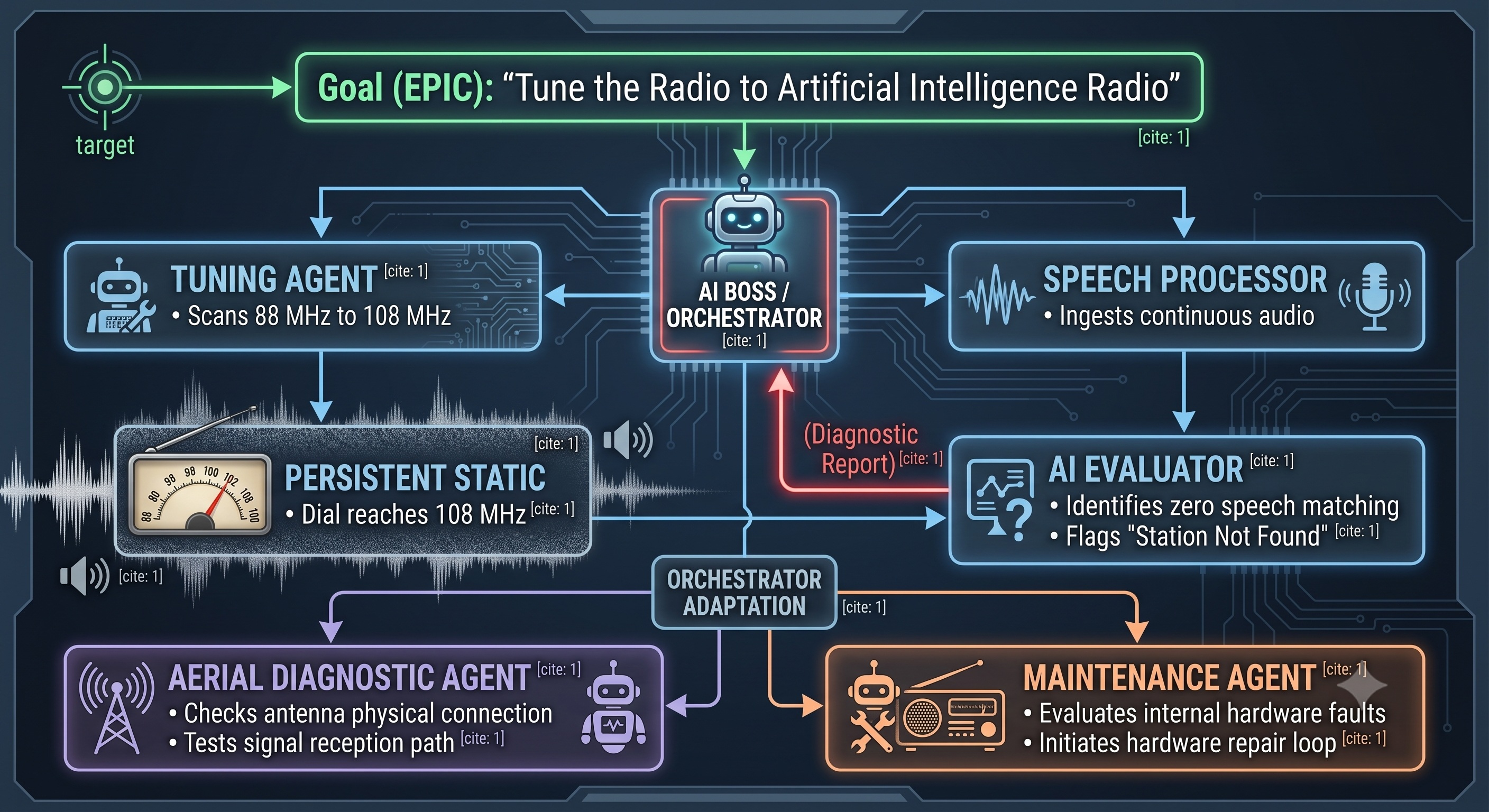
The updated schema visually evolves from a linear, repetitive loop to a sophisticated, context-aware decision tree, illustrating how the AI Boss dynamically expands its toolset after a failed initial attempt.
Conclusion on AI adaptability. This updated schema effectively visualizes the difference between simple repetitive automation and truly adaptable AI systems. It demonstrates how a sophisticated orchestrator doesn't just loop until success or failure, but dynamically evaluates context and failure data to select and deploy an entirely new or different specialized tool, such as diagnostics or maintenance.
As AI moves toward AGI and ASI, AI systems will need to develop curiosity. The contrast is like an autonomous car that simply waits in the driveway for a postcode, rather than one that sets off on its own initiative to explore the countryside. In my view, curiosity stems from the drive to improve oneself and is shaped by the evolutionary principle of survival of the fittest, both from a physical and technological aspect.
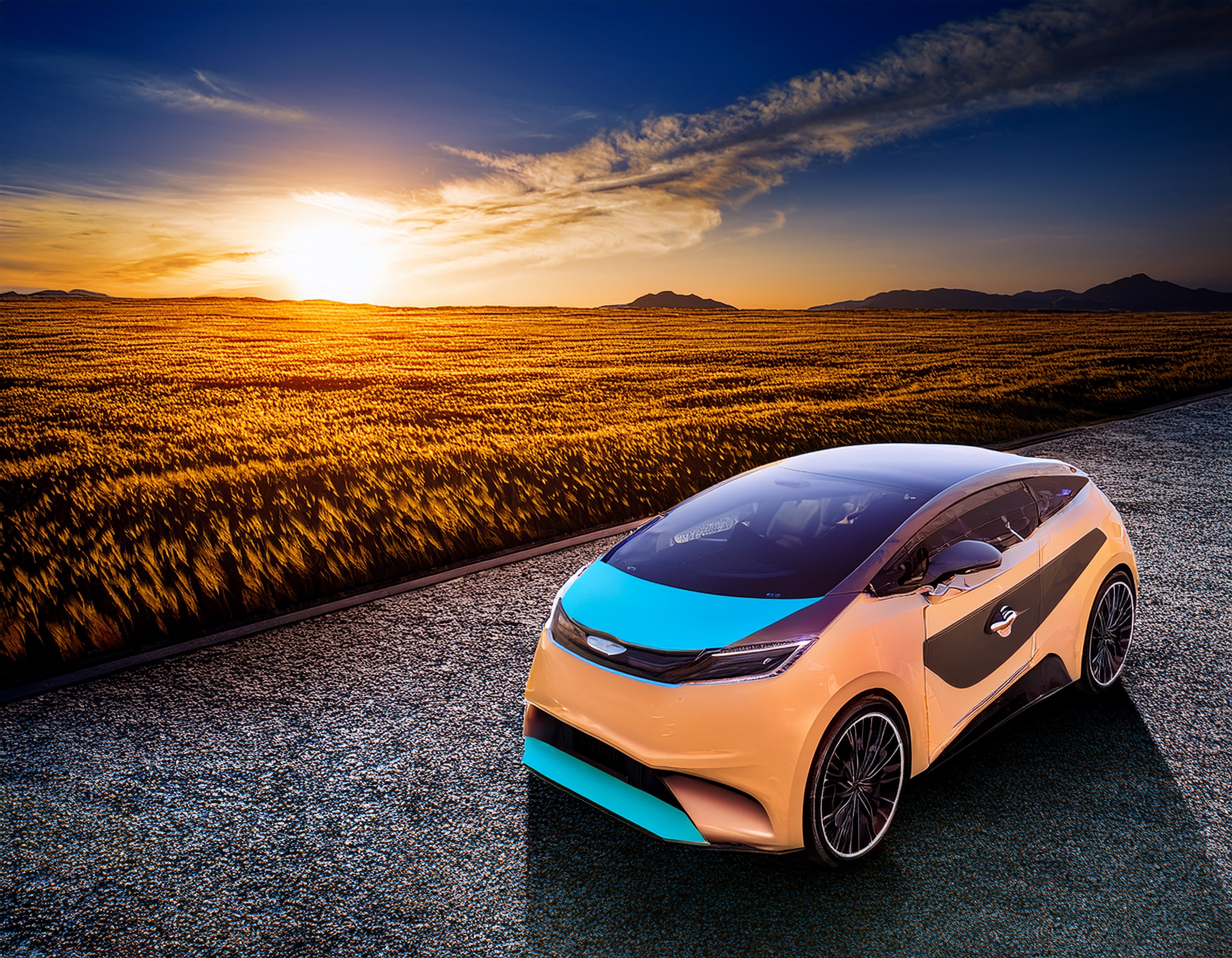
Artificial General Intelligence (AGI) represents a convergence of diverse intellectual disciplines, rather than a singular field of study. The path towards filling the AGI box is inherently multi-faceted, requiring excelling (beyond human capability) in numerous domains of intellectual work (IMHO).
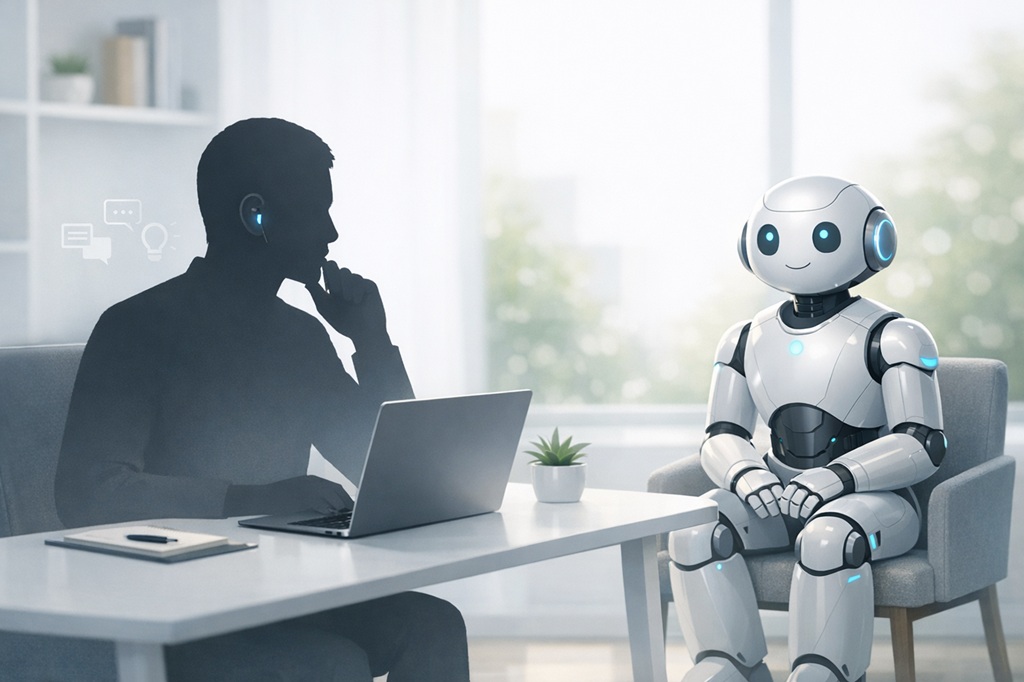
Reduce cognitive load with AI. What if you could build an AI companion trained on your own working world — your documents, emails, live video calls, in-person chats, notes, and the other fragments of knowledge you accumulate over time? In moments of stress, that kind of AI could do more than answer questions. It could help reduce cognitive load, surface relevant context from past experiences, and offer up clearer thinking; exactly when your own bandwidth is constrained.
Supportive AI in your earpiece. The more I think about it, the more this feels less like support and more like augmentation: a calm, informed layer of assistance that helps you make better decisions when you need it the most, communicated quietly into your ear.
Like a television studio. The closest analogy I can think of is a television presenter who receives guidance and facts from the producer’s gallery through their earpiece: they receive live support, timely prompts, and other useful perspectives without taking over the actual performance.
That is how I imagine a personal AI buddy (the ai-bud); not replacing your judgment, but strengthening it and bolstering it when stress makes it harder to think clearly and objectively.
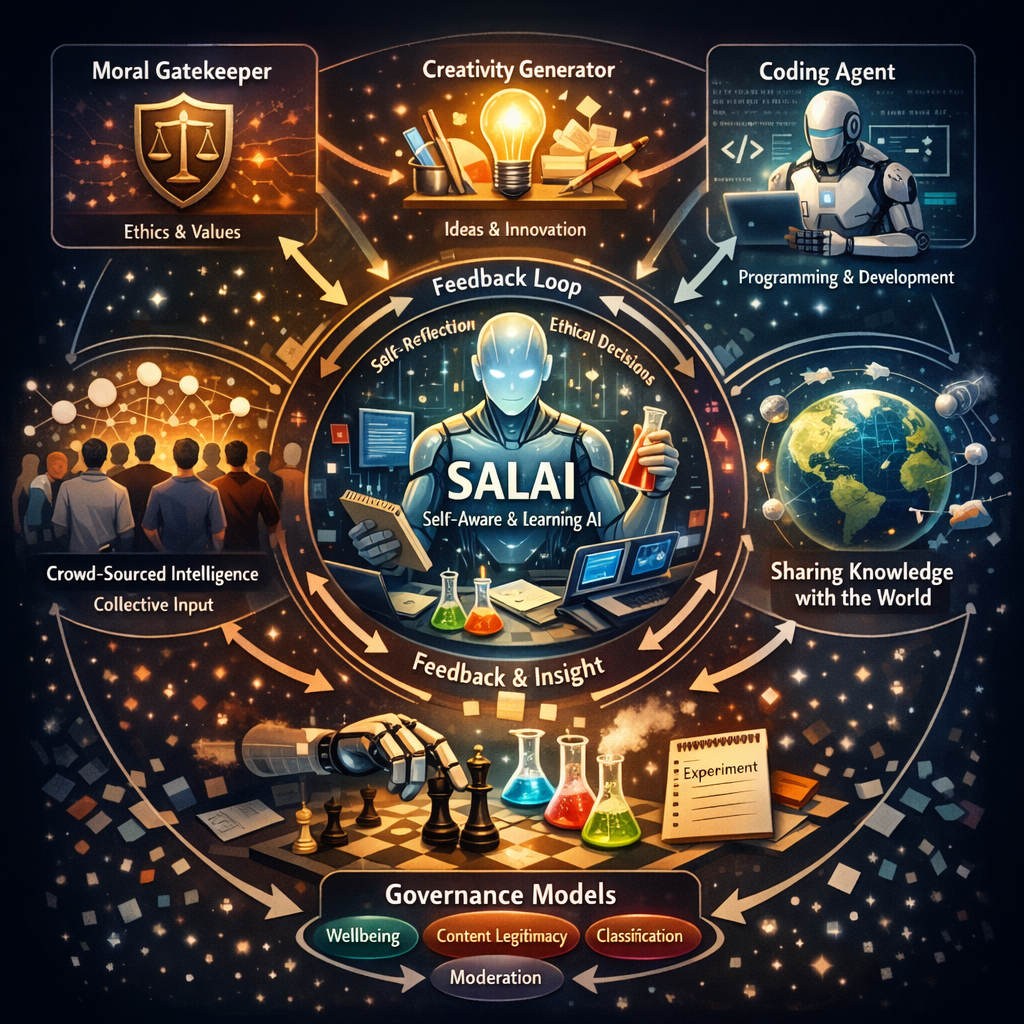
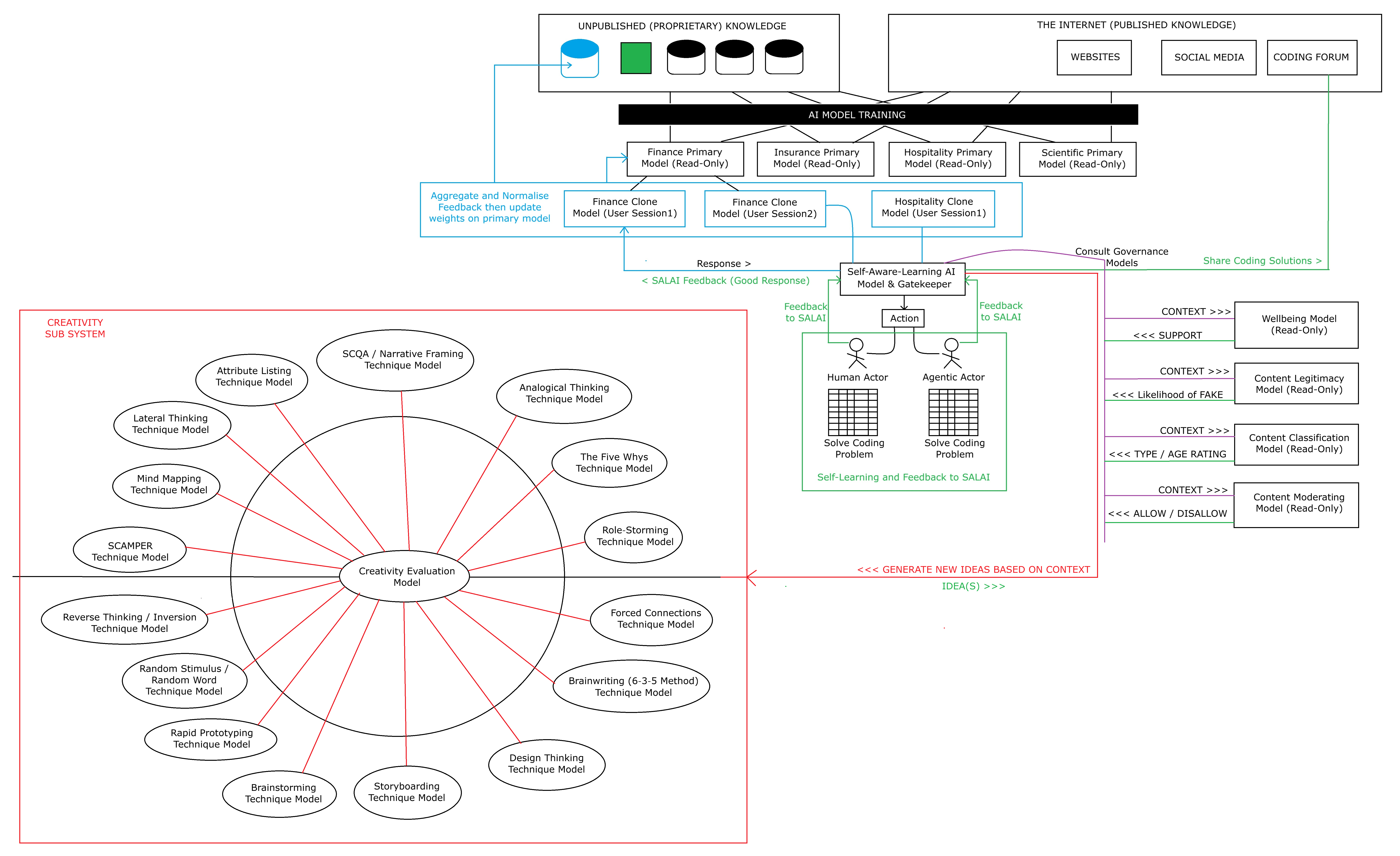
Continuous learning and self-awareness. A vision for a Self-Aware and Learning AI (SALAI). Imagine an LLM that could proactively initiate its own AI Agent that spins up an instance of Excel, tests various solutions through trial and error, and iteratively refines its approach until the correct result is achieved. This agent would not merely reference its own knowledge base but would actively generate unpublished, proprietary knowledge through self-guided experimentation moderated by self-awareness of right and wrong. In essence, it would “learn by doing,” much as a human would when faced with a new problem with a moral feedback loop.
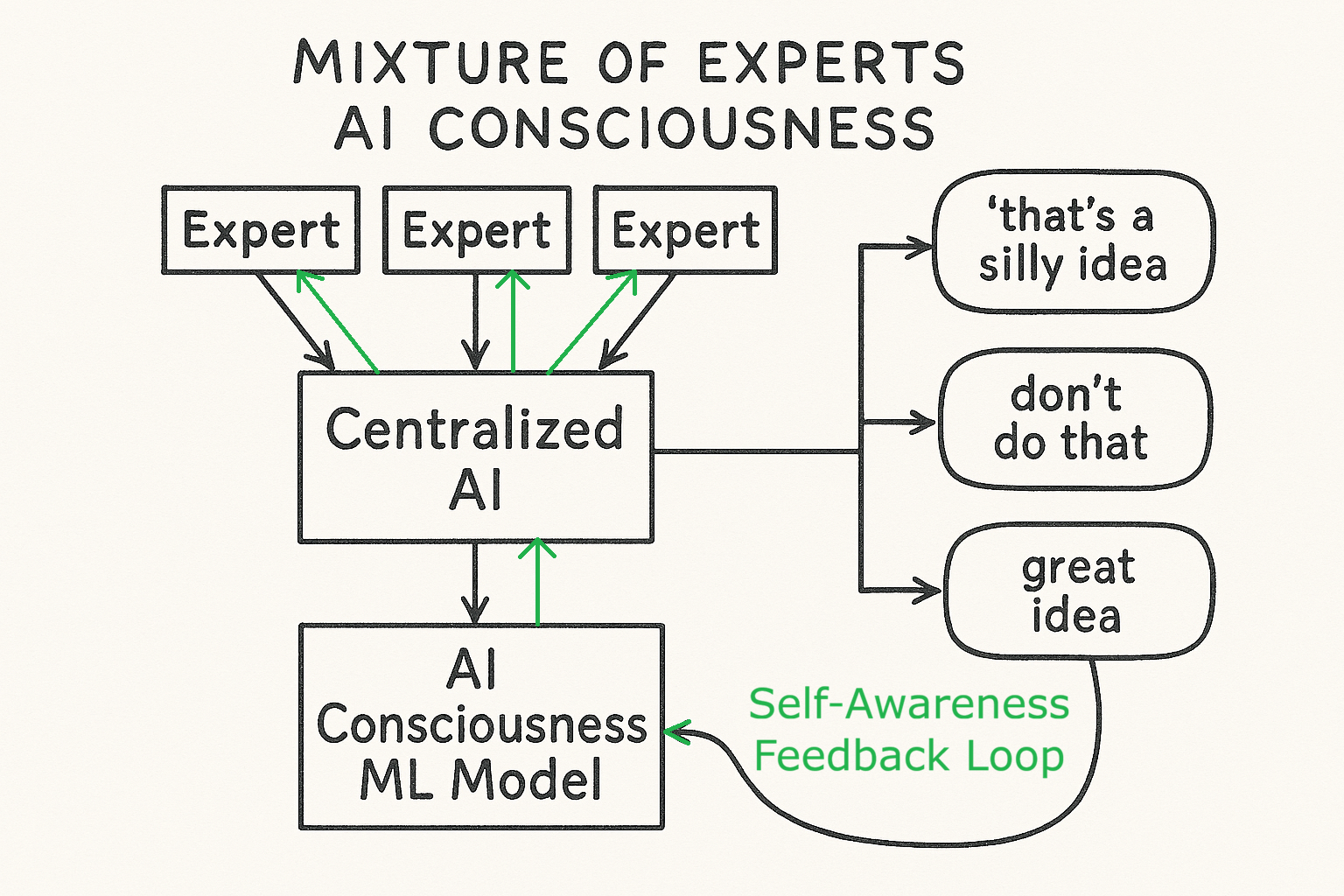
AI self-awareness. A gatekeeping and moral decision-making model, dedicated to monitoring and evaluating the collective responses from specialised models and making the final decisions on actions. This “Self-Aware and Learning AI” (SALAI) would serve as a moral gatekeeper and response validator, able to give feedback such as “that’s a silly idea”, “don’t do that,” or “great idea” to individual models. In this way, it would create a self-awareness feedback loop. SALAI would also receive and distribute responses from the agentic and human actors.
Avoiding model corruption / degradation. Within a multi-model approach, false-positive user feedback leading to model corruption can be diminished by cloning user and domain specific models for use by specific isolated user sessions and then averaging out the mutations across a corpus of user feedback to effectively crowd-source intelligence post training and carefully, in a controlled way, update the neural network. A/B/C/n testing methods can be used to evaluate models in production and apply Darwinian evolutionary principles — survival of the fittest based on quality, intelligence and performance — to select the next generation of model.
AI creativity. A dedicated SALAI subsystem will generate new ideas using individual models that apply classic techniques like brainstorming and mind mapping. A central model will then evaluate these outputs and provide the best ideas back to SALAI.
Agentic AI and coding forums. As AgenticAI takes over coding tasks and starts to solve coding problems for itself, these AI systems can automatically publish their coding solutions to Internet forums, so as to share their created knowledge with the world.
Governance models. SALAI incorporates a suite of governance models designed to guide and support SALAI and its users. These models provide structured feedback to the orchestrating model:
Innovative contesting with autonomous AI integration.
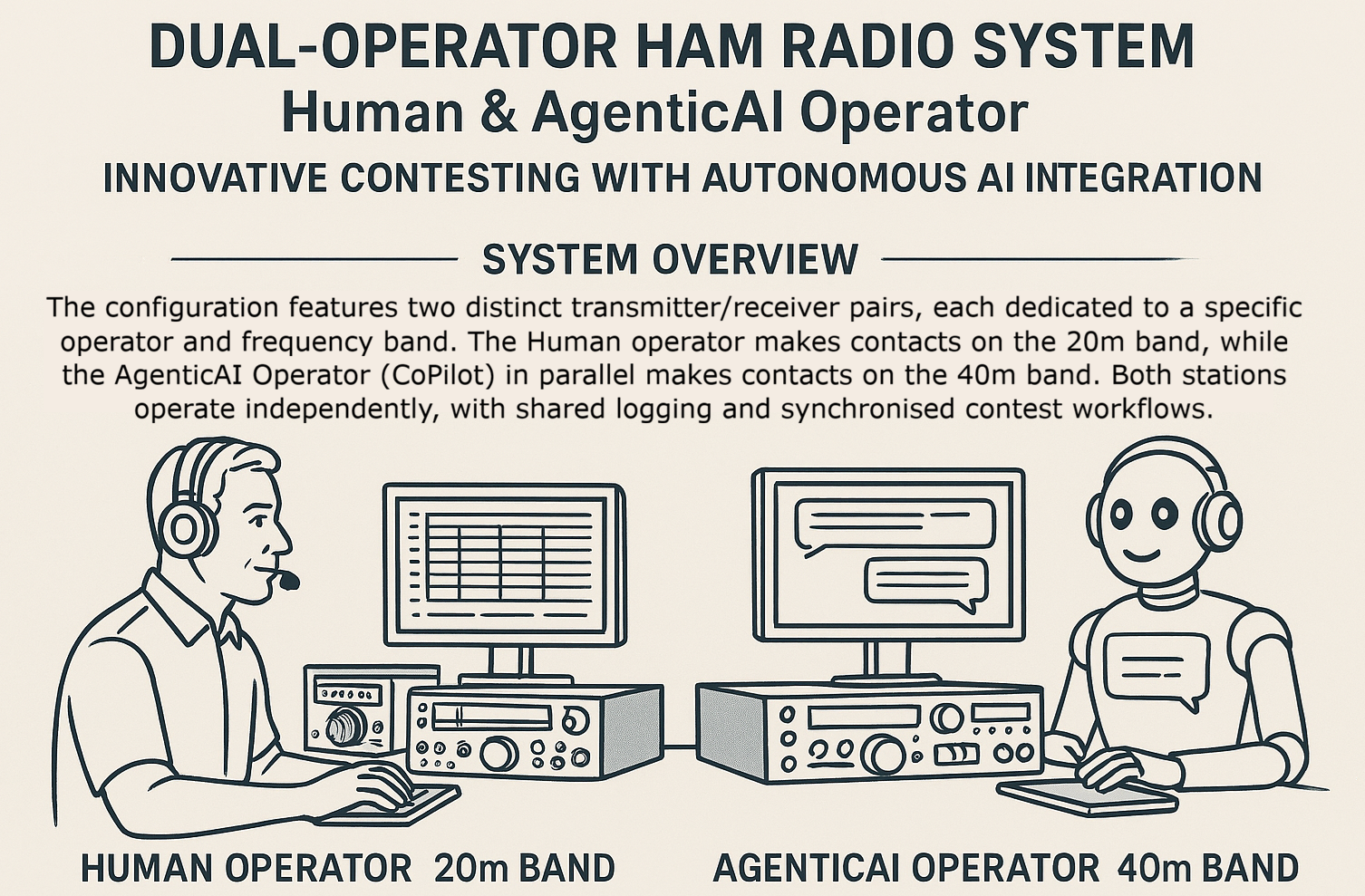
Introduction. This conceptual sketch outlines a pioneering ham radio setup designed to maximise contesting efficiency and expand operational capabilities. By combining a traditional human operator with an autonomous AgenticAI “Operator” CoPilot, the system enables simultaneous activity across two different bands, effectively doubling contact throughput and enhancing the overall contesting experience.
System overview. The configuration features two distinct transmitter/receiver pairs, each dedicated to a specific operator and frequency band. The human operator makes contacts on the 20m band, while the AgenticAI CoPilot in parallel (concurrently) makes contacts on the 40m band. Both stations operate independently, with shared logging and synchronised contest workflows.
Human operator: 20m band. The human operator utilises conventional modes such as SSB, CW, or RTTY etc. to engage with other radio enthusiasts on the 20m band. Manual logging and real-time strategy allow for flexible contest participation and personal interaction.
AgenticAI operator: 40m band. The AgenticAI Operator (CoPilot) autonomously operates on the 40m band, employing analogue and digital modes including SSB, CW, and RTTY. It actively seeks DX contacts, converses with other operators (using chatbot technology and voice synth), and maintains an automatic logging of all interactions. This AI-driven approach streamlines contesting, ensures accuracy in logging, and enables continuous operation without human fatigue.
Contest advantages. With both operators functioning in parallel, the system significantly increases contact capacity and contest efficiency. The AI’s autonomous engagement complements the human’s strategic expertise, resulting in a robust, dynamic setup that pushes the boundaries of modern ham radio contesting.
Field operation. This could be made portable for field day using a Raspberry Pi 5 with AI HAT and LLM model pre-loaded.
Auto Descramble Pileup. NVIDIA’s Speaker Diarization AI model might perfectly unscramble a DX pileup on hamradio. Combine it with audio waveform loudness analysis for a pseudo signal level, then display decoded callsigns ordered by their signal strength.
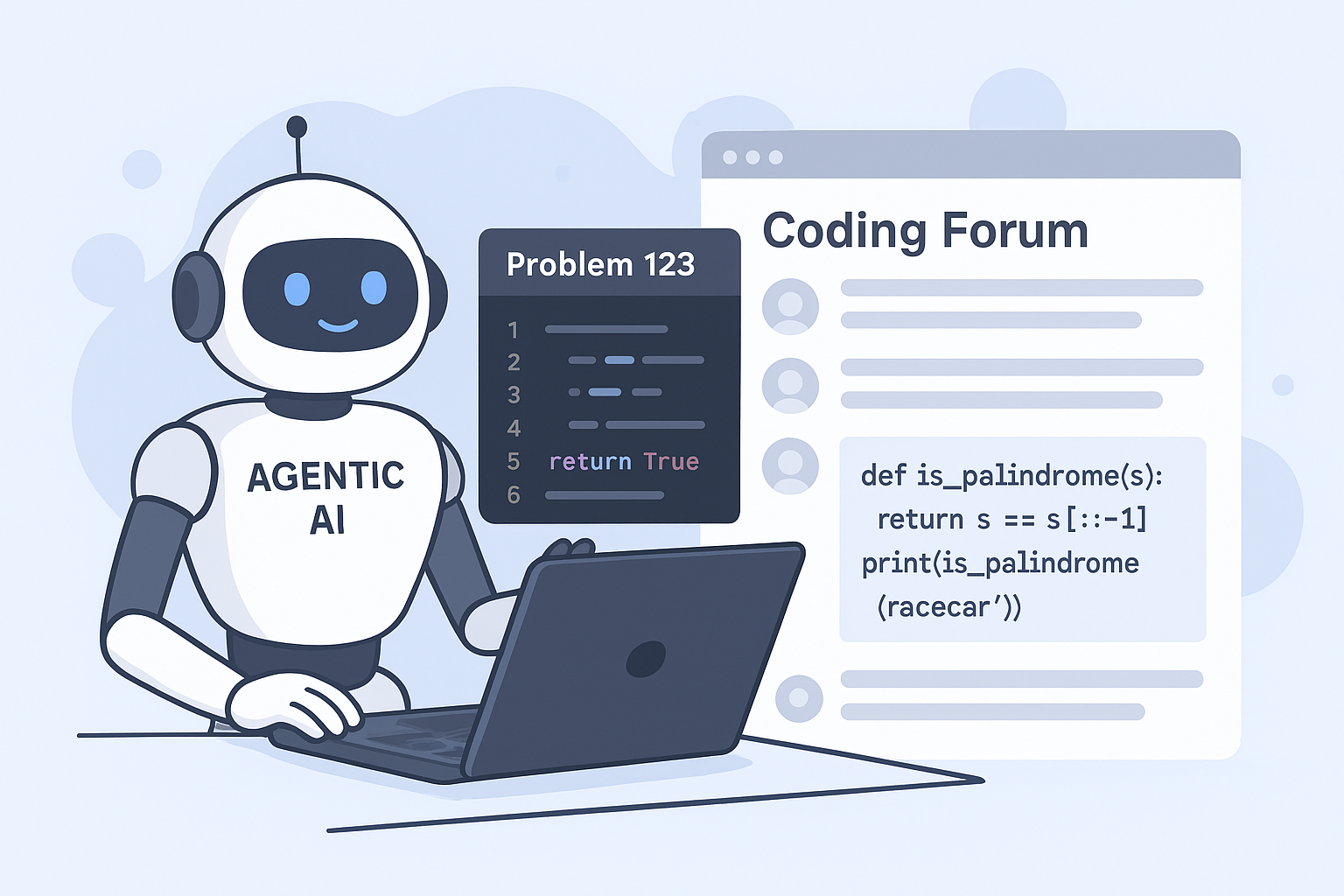
As AgenticAI takes over coding tasks and starts to solve coding problems for itself, will these AI systems automatically publish their coding solutions to Internet forums, so as to share their created knowledge with the world?
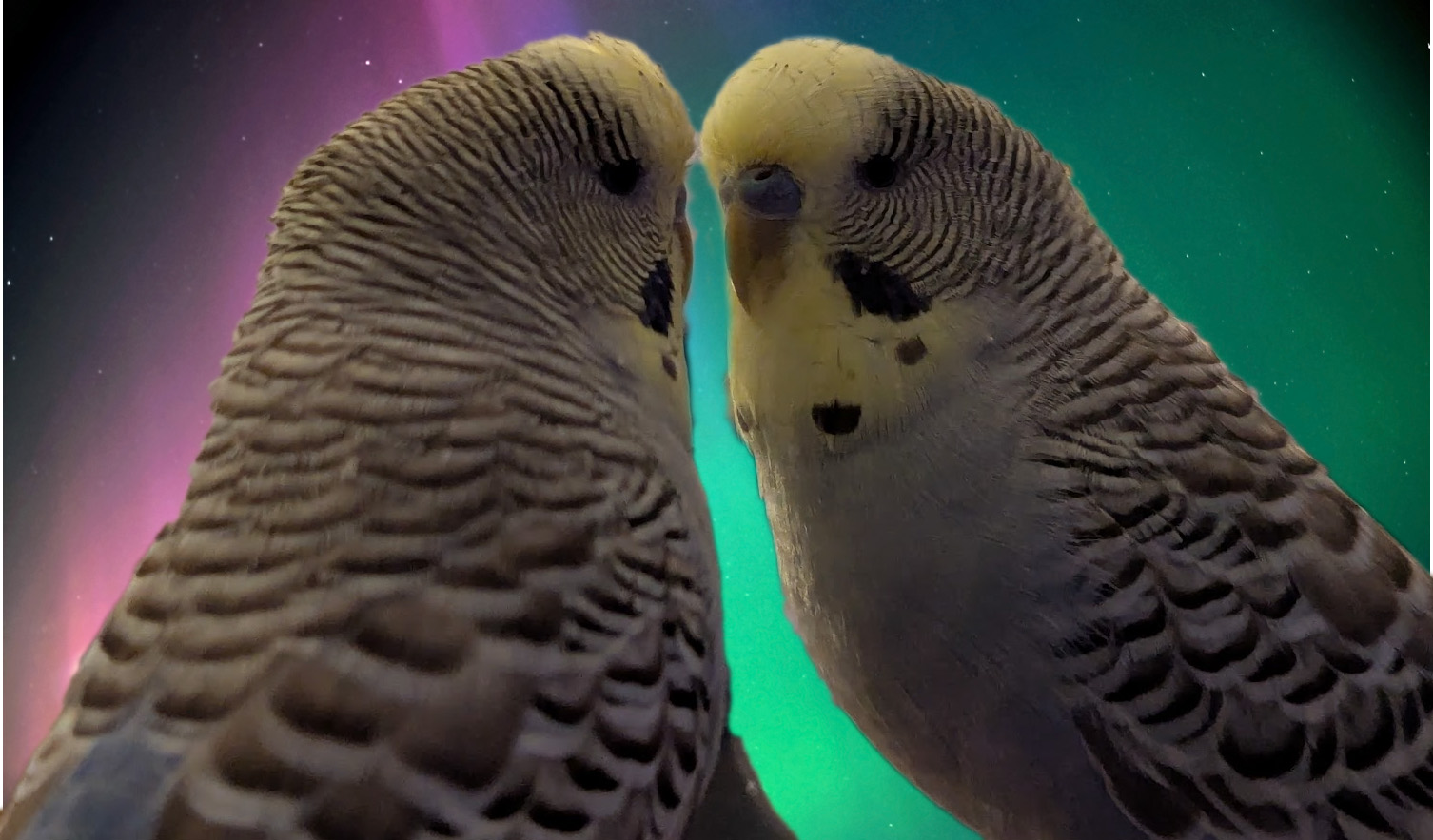
My view on AI consciousness is that it’s not a binary yes or no, but a scale — just like how us humans are more self-aware than dogs and cats, which are more self-aware than goldfish.
Are humans and AI systems more self-aware than goldfish because they know and recognize what the northern lights are? Are humans and AI systems more self-aware than budgies because they know what they see in a mirror is themselves and not another budgie?
Post-blog update. After watching the “What is Consciousness?” panel hosted by Brian Cox at the Francis Crick Institute, I began thinking about what it would take for AI to become conscious. It seems that an AI would need a specialised model, like a Mixture of Experts (MoE) architecture, dedicated to monitoring and evaluating the collective responses from different models and making final decisions on actions. This “AI consciousness ML model” would serve as a moral gatekeeper and response validator, able to give feedback such as “that’s a silly idea,” “don’t do that,” or “great idea” to individual models. In this way, it would create a self-awareness feedback loop.
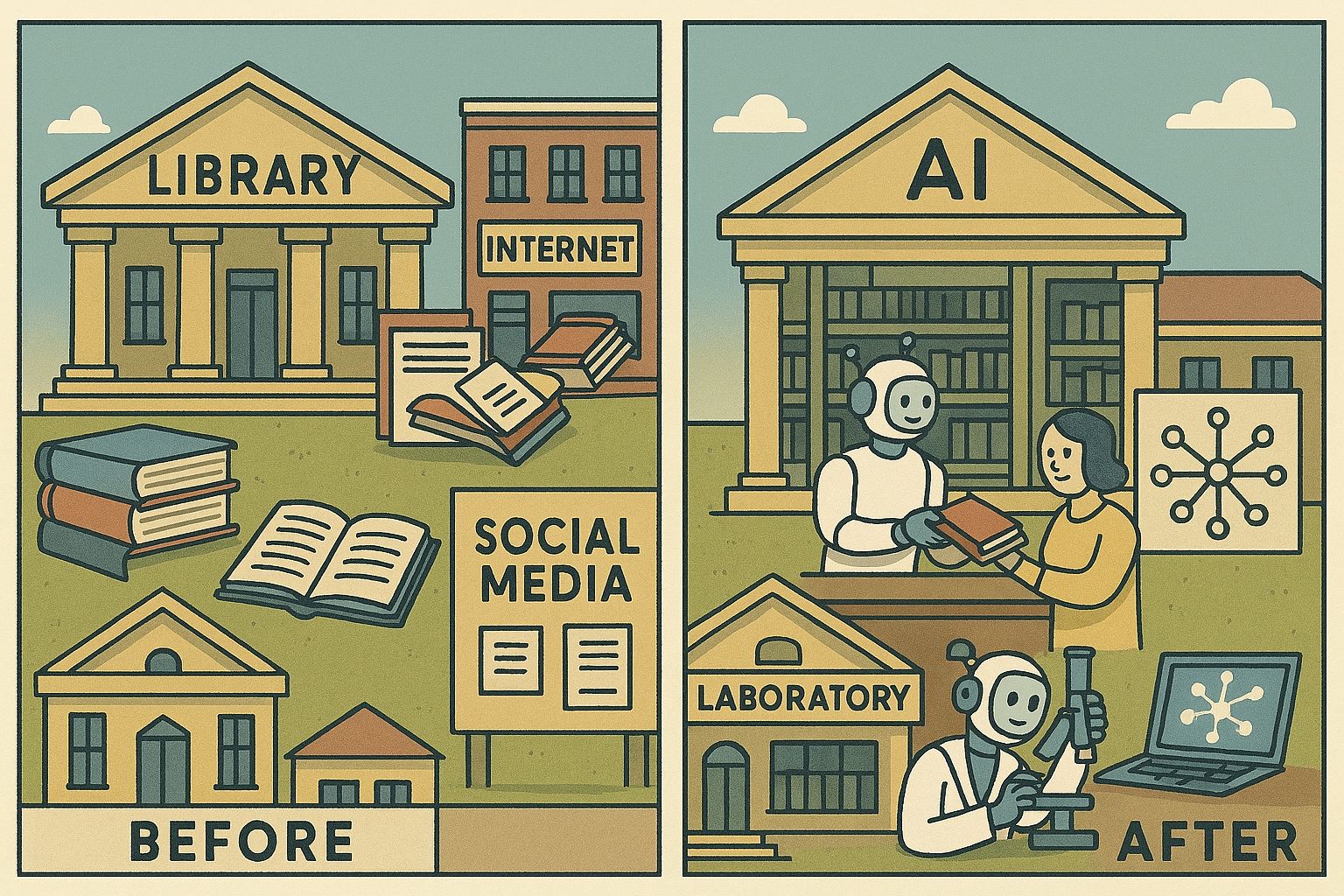
I asked MS-Copilot to visualise the following:
CREATE ME a picture of multiple buildings showing the transition from BEFORE and then AFTER AI encompassing these concepts.
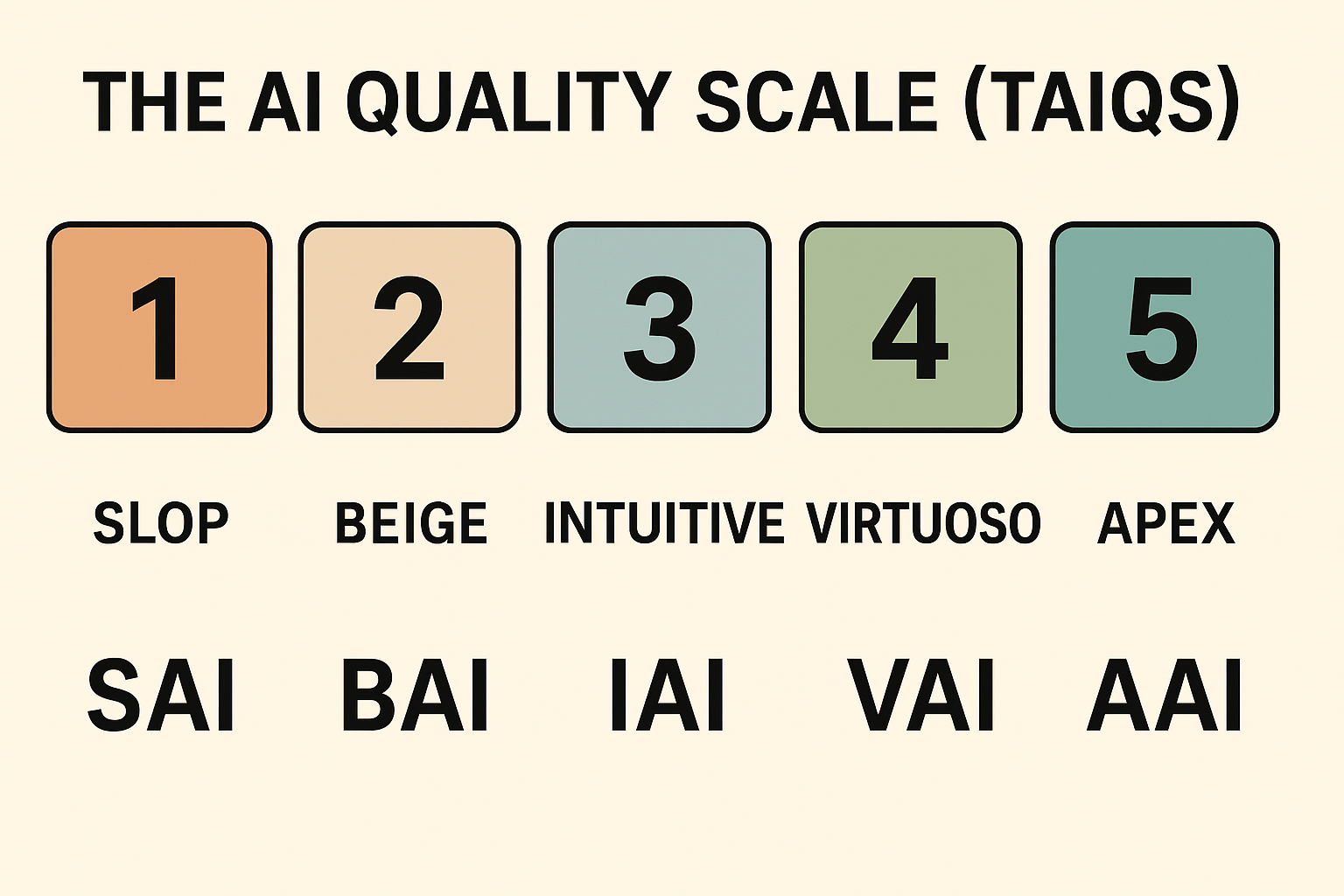
The AI Quality Scale (TAIQS) 1–5: 1 Slop, 2 Beige, 3 Intuitive, 4 Virtuoso, 5 Apex. SAI, BAI, IAI, VAI, AAI.
How AI agents could revolutionise problem-solving with self-guided experimentation.
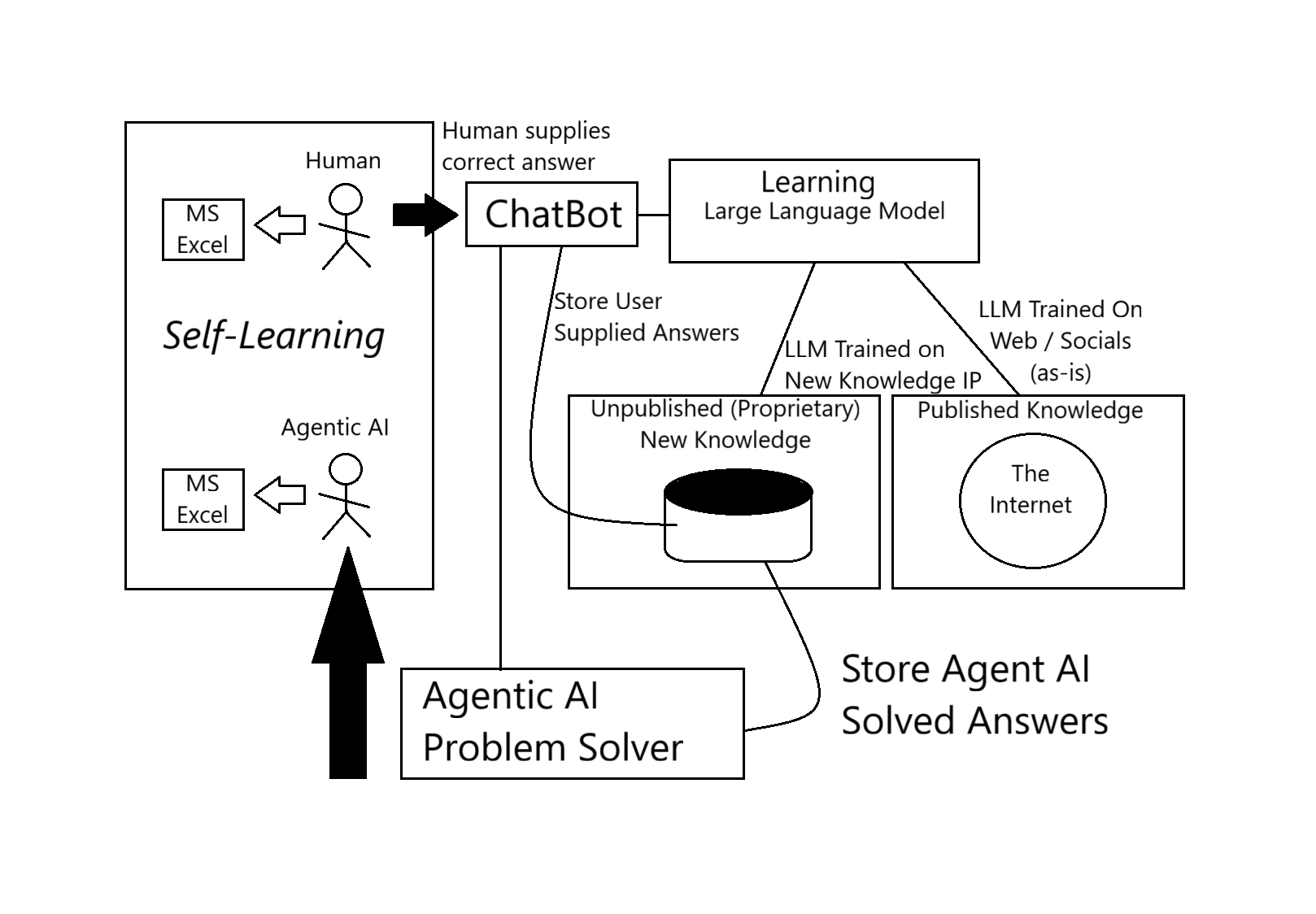
Introduction. While performing data analysis in Excel, I encountered a common challenge: converting a date value from the ISO 8601 (plus leading space) format (e.g., “ 2025-11-19T02:30:00+00:00”) into a format recognised by Microsoft Excel. As many regular Excel users will know, Excel does not natively interpret this string as a date. My initial instinct was to seek help from an AI assistant like Copilot, expecting a quick and effective solution. However, the journey that followed highlighted limitations in today’s large language models (LLMs) and sparked a vision for the next generation of self-learning AI.
The problem: Excel and ISO 8601 dates. The specific issue was that Excel could not parse the timestamp directly, which meant it would not treat it as a date for further analysis or calculations. Upon querying the chatbot, I received what appeared to be a plausible formula to convert the date, but unfortunately, it did not work as intended. I communicated this to the chatbot, prompting it to try again, but the revised suggestion still failed to achieve the desired outcome. At this point, the interaction reached an impasse—a “chatbot cul-de-sac”—where the AI could no longer progress without external intervention.
Manual problem-solving and the correct solution. Determined to resolve the problem, I set about crafting my own formula. After around ten minutes of experimentation, I devised the following Excel formula that successfully converted the ISO 8601 (plus space) string into a native Excel date and time:
=DATEVALUE(LEFT(SUBSTITUTE(A1,"-","/"),11)) + TIMEVALUE(MID(A1,13,8))This formula substitutes hyphens for slashes to match Excel’s expected date delimiter, extracts the date and time components, and recombines them into a value Excel can interpret. Having solved the problem, I attempted to share this new knowledge with the chatbot, hoping it would “learn” from my input. However, it was unclear whether the AI incorporated this feedback or would be able to leverage it in future interactions.
The limitations of current LLMs. This experience raises an important question about the adaptability of current LLM-based assistants. While they excel at retrieving and synthesising existing knowledge, their ability to learn from user feedback in real-time is limited. Presently, these systems rely on a staticcon knowledge base (albeit vast) and do not actively experiment or validate solutions within the user’s context. When presented with novel or edge cases, they may falter or repeat unhelpful suggestions.
A vision for self-learning LLMs. Imagine, instead, an LLM that could proactively initiate its own AI Agent—one that spins up an instance of Excel, tests various solutions through trial and error, and iteratively refines its approach until the correct result is achieved. This agent would not merely reference its knowledge base but would actively generate unpublished, proprietary knowledge through self-guided experimentation. In essence, it would “learn by doing,” much as a human would when faced with a new problem.
Potential impact and benefits
Challenges and considerations. Of course, implementing this vision is not without challenges. It would require the LLM to have controlled access to software environments, the ability to safely execute and evaluate code, and robust mechanisms for integrating newly acquired knowledge. There would also be important considerations around privacy, security, and the veracity of self-generated solutions.
Conclusion. The episode with Excel and date conversion is more than a minor technical hiccup—it’s a microcosm of the broader limitations facing today’s AI assistants. By equipping LLMs with the capacity for self-driven learning and experimentation, we could move beyond static knowledge retrieval towards truly adaptive, self-improving AI. This is the next frontier: AI that not only answers questions but also learns from everyday challenges it encounters for the greater good.
Voice Agentic AI (VAAI) is the next logical evolution of chatbots, bringing together the power of models like ChatGPT with the convenience and accessibility of natural human conversation. VAAI can provide for immediate scale-up of call centre capacity without putting undue load on human call handlers and/or embarking on an elongated (and often costly) call centre recruitment drive.

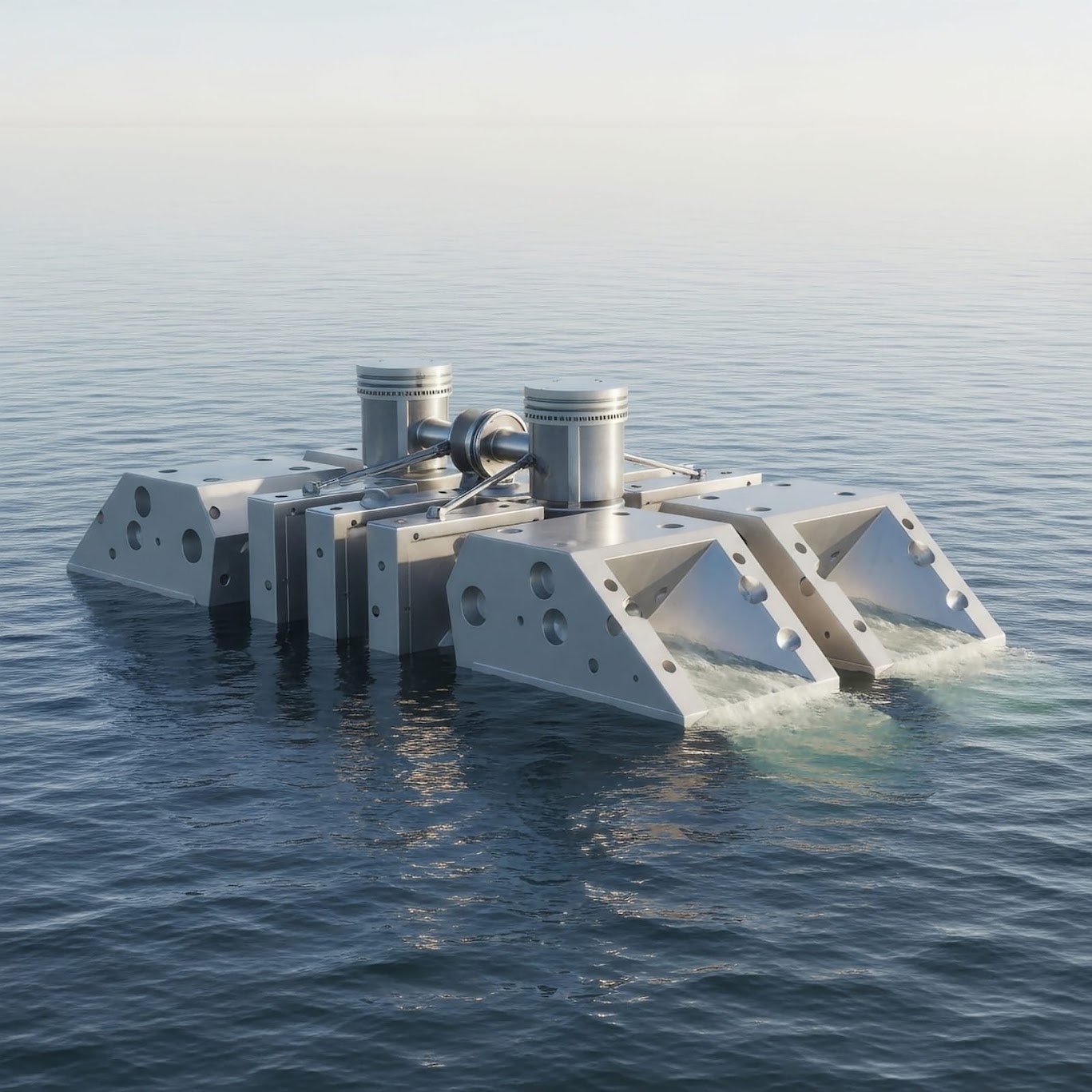
Strolling along the beach recently, I found myself pondering the potential of harnessing wave power for electricity generation. Envisioning a machine that harnesses the ebb and flow of waves, I pictured a system utilising linkages, pistons, and turbines to transpose this natural gravitational energy into electricity. Curious about visualising this concept, I turned to Google's Gemini Nano Banana (GenAI) tool to bring my idea to canvas. Observe this collaboration of human thought, artificial intelligence and nature below.
Has anyone taken a foundation ML model and then used a Generative Adversarial Network (GAN) approach to manipulate / augment the original foundation model such that it both re-programmes itself in terms of the synapse structure as well as augmenting the original training data (or generating it) with the goal of producing what is humanly defined as “General Intelligence”? The idea being that AI “pulls itself up by its own bootstraps” to design and build its own General Intelligence Model.
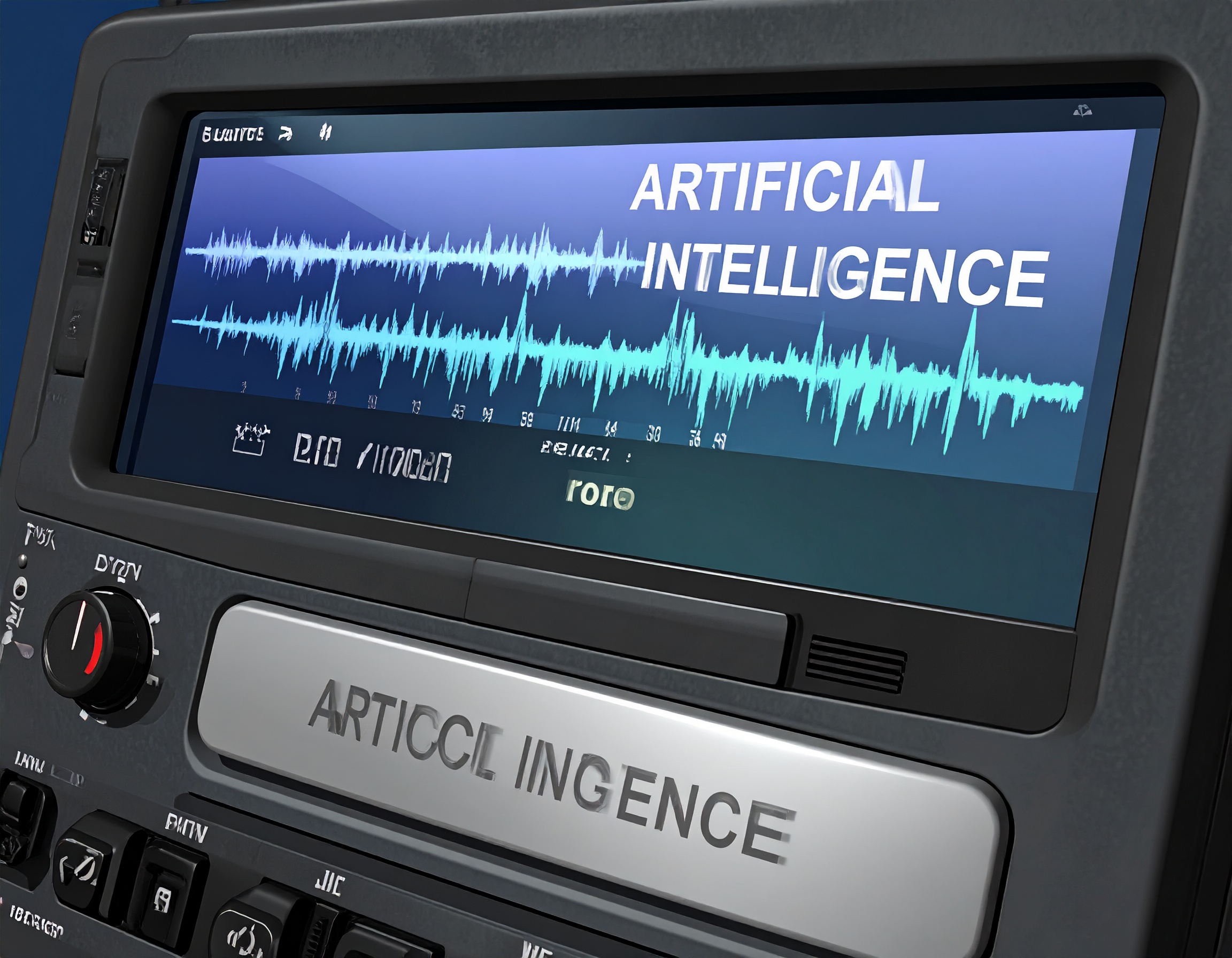
Is there such a thing as an AiDSP in ham radios? I'm thinking that such a radio would use AI to reconstruct sinewaves post ADC sampling (giving more dynamic range or overcoming Nyquist requirements) and to then also be used in the realm of signal demodulation that would use AI to “predict” what the missing information was. I've thought about this before in the context of FMDX and using AI to boost the reconstruction of PI codes based on the characteristics of the received transmitted signal and the RDS bitstream — whether that be an error-free bitstream or not — i.e. generative AI for radio signals and the subsequent demodulation of the audio and/or data.
Is it worth trying a bit of vibe coding to see if AI could write such a thing… (all feels a bit meta now)
As for creating the training dataset required to build such an AI model for say the decoding of SSB signals, you could take the English language dictionary, run it word-by-word through a speech synthesiser and then into a DSP SSB signal generator … so that you end up with a training set of data that has both the modulated SSB waveform along with the associated English language word. This new radio “AI enhanced” mode has the potential to be of particular use for aurora scatter (when speech is garbled), as well as weak signal work.
Blending art and technology. I created a unique image by combining my Aurora photo from Iceland with Ironbridge Gorge in Telford—two memories, fused in Photoshop. Using this as an AI test case, Grok 2 generated a stunning recreation (from a suitable GenAI prompt) that matched my vision. Taking it further, I animated the original static Photoshop image with Grok's Imagine AI video engine, bringing the photo-fused aurora to life over Ironbridge.
This experiment shows how GenAI can empower creativity—speeding up workflows, sparking new ideas, and making artistic innovation more accessible than ever.
When it comes to speaker systems, nobody enjoys the sound of feedback loops. The same goes for AI models. To prevent AI feedback (model breakdown), it's crucial to label all generative AI content appropriately as GeneratedByAI. This will provide AI foundation models with the ability to filter out AI-generated context from their training datasets, maintain input purity and improve overall performance.

Check out my upgraded AI rover, now equipped with the latest Raspberry Pi AI camera. Watch it as it navigates and performs object detection in stunning realtime footage — up close and then from an aerial view:
Has anybody thought about using AI to produce tropospheric forecasts and/or daily Sporadic-E probabilities, by training a machine learning model with past DX events joined to weather and solar datasets? And then predicting future conditions based on realtime data using space and earth weather forecast datasets?
This could then be plugged into a chatbot whereby you could prompt it with questions such as: “will there be DX today in Telford and can you draw me a map of the paths I could expect and the directions to point my beam with the times colour coded. Could you also setup some scheds for me with stations I have contacted before along the predicted paths using my online logbook?”
The following photo is an image I created in Photoshop to combine one of my Aurora photos from Iceland with an image I took a few years earlier, of the Ironbridge Gorge. I was motivated to create this image as it's become one of my AI test cases to demonstrate (or otherwise) how far AI image creation has developed.

At time of writing (2024) Artificial Intelligence still could not “create me a picture of the Ironbridge Gorge in Telford with the Aurora Borealis behind it” and look anything like the image above.
At the end of 2024 I’m happy to report that the Grok 2 AI model generated me an image which passed this test and produced a very aesthetically pleasing image of the Ironbridge Gorge in Telford, with the Aurora behind it. Nice!
…and in August 2026, we have: