How AI agents could revolutionise problem-solving with self-guided experimentation.
Introduction. While performing data analysis in Excel, I encountered a common challenge: converting a date value from the ISO 8601 (plus leading space) format (e.g., “ 2025-11-19T02:30:00+00:00”) into a format recognised by Microsoft Excel. As many regular Excel users will know, Excel does not natively interpret this string as a date. My initial instinct was to seek help from an AI assistant like Copilot, expecting a quick and effective solution. However, the journey that followed highlighted limitations in today’s large language models (LLMs) and sparked a vision for the next generation of self-learning AI.
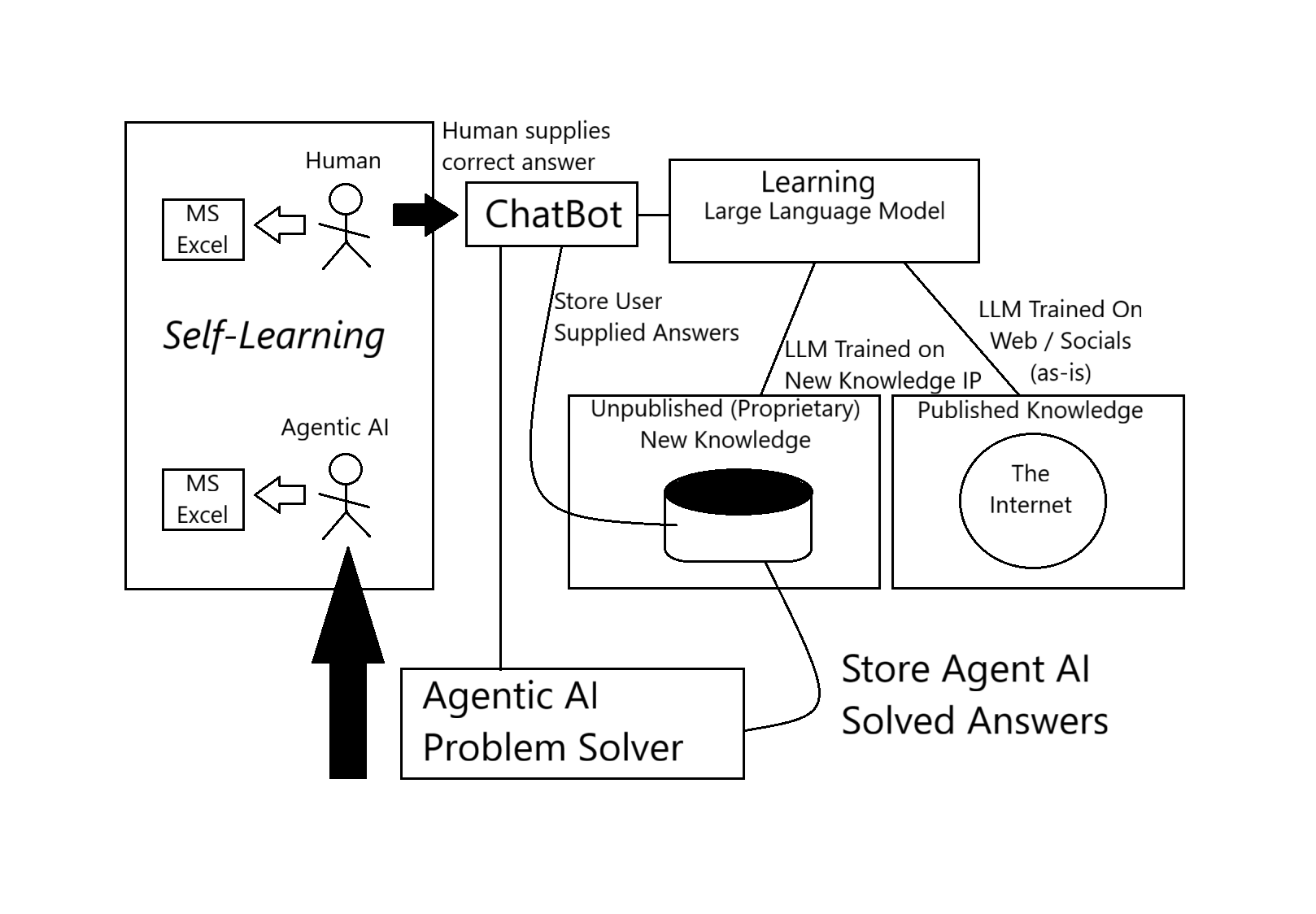
The problem: Excel and ISO 8601 dates. The specific issue was that Excel could not parse the timestamp directly, which meant it would not treat it as a date for further analysis or calculations. Upon querying the chatbot, I received what appeared to be a plausible formula to convert the date, but unfortunately, it did not work as intended. I communicated this to the chatbot, prompting it to try again, but the revised suggestion still failed to achieve the desired outcome. At this point, the interaction reached an impasse—a “chatbot cul-de-sac”—where the AI could no longer progress without external intervention.
Manual problem-solving and the correct solution. Determined to resolve the problem, I set about crafting my own formula. After around ten minutes of experimentation, I devised the following Excel formula that successfully converted the ISO 8601 (plus space) string into a native Excel date and time:
This formula substitutes hyphens for slashes to match Excel’s expected date delimiter, extracts the date and time components, and recombines them into a value Excel can interpret. Having solved the problem, I attempted to share this new knowledge with the chatbot, hoping it would “learn” from my input. However, it was unclear whether the AI incorporated this feedback or would be able to leverage it in future interactions.
The limitations of current LLMs. This experience raises an important question about the adaptability of current LLM-based assistants. While they excel at retrieving and synthesising existing knowledge, their ability to learn from user feedback in real-time is limited. Presently, these systems rely on a staticcon knowledge base (albeit vast) and do not actively experiment or validate solutions within the user’s context. When presented with novel or edge cases, they may falter or repeat unhelpful suggestions.
A vision for self-learning LLMs. Imagine, instead, an LLM that could proactively initiate its own AI Agent—one that spins up an instance of Excel, tests various solutions through trial and error, and iteratively refines its approach until the correct result is achieved. This agent would not merely reference its knowledge base but would actively generate unpublished, proprietary knowledge through self-guided experimentation. In essence, it would “learn by doing,” much as a human would when faced with a new problem.
Potential impact and benefits
Adapt to novel data formats and workflows without waiting for human intervention.
Develop and retain new solutions, enriching its problem-solving repertoire over time.
Deliver more reliable, context-aware assistance, especially for technical or domain-specific tasks.
Reduce user frustration by avoiding repetitive “cul-de-sacs” and enabling continuous improvement.
Challenges and considerations. Of course, implementing this vision is not without challenges. It would require the LLM to have controlled access to software environments, the ability to safely execute and evaluate code, and robust mechanisms for integrating newly acquired knowledge. There would also be important considerations around privacy, security, and the veracity of self-generated solutions.
Conclusion. The episode with Excel and date conversion is more than a minor technical hiccup—it’s a microcosm of the broader limitations facing today’s AI assistants. By equipping LLMs with the capacity for self-driven learning and experimentation, we could move beyond static knowledge retrieval towards truly adaptive, self-improving AI. This is the next frontier: AI that not only answers questions but also learns from everyday challenges it encounters for the greater good.
Voice Agentic AI
Note · call centres
Voice Agentic AI (VAAI) is the next logical evolution of chatbots, bringing together the power of models like ChatGPT with the convenience and accessibility of natural human conversation. VAAI can provide for immediate scale-up of call centre capacity without putting undue load on human call handlers and/or embarking on an elongated (and often costly) call centre recruitment drive.
VAAIVTASVoiceToAgenticSystemCustomerServiceCRM
Visualising Abstract Ideas with GenAI
Sketch · tidal / wave power
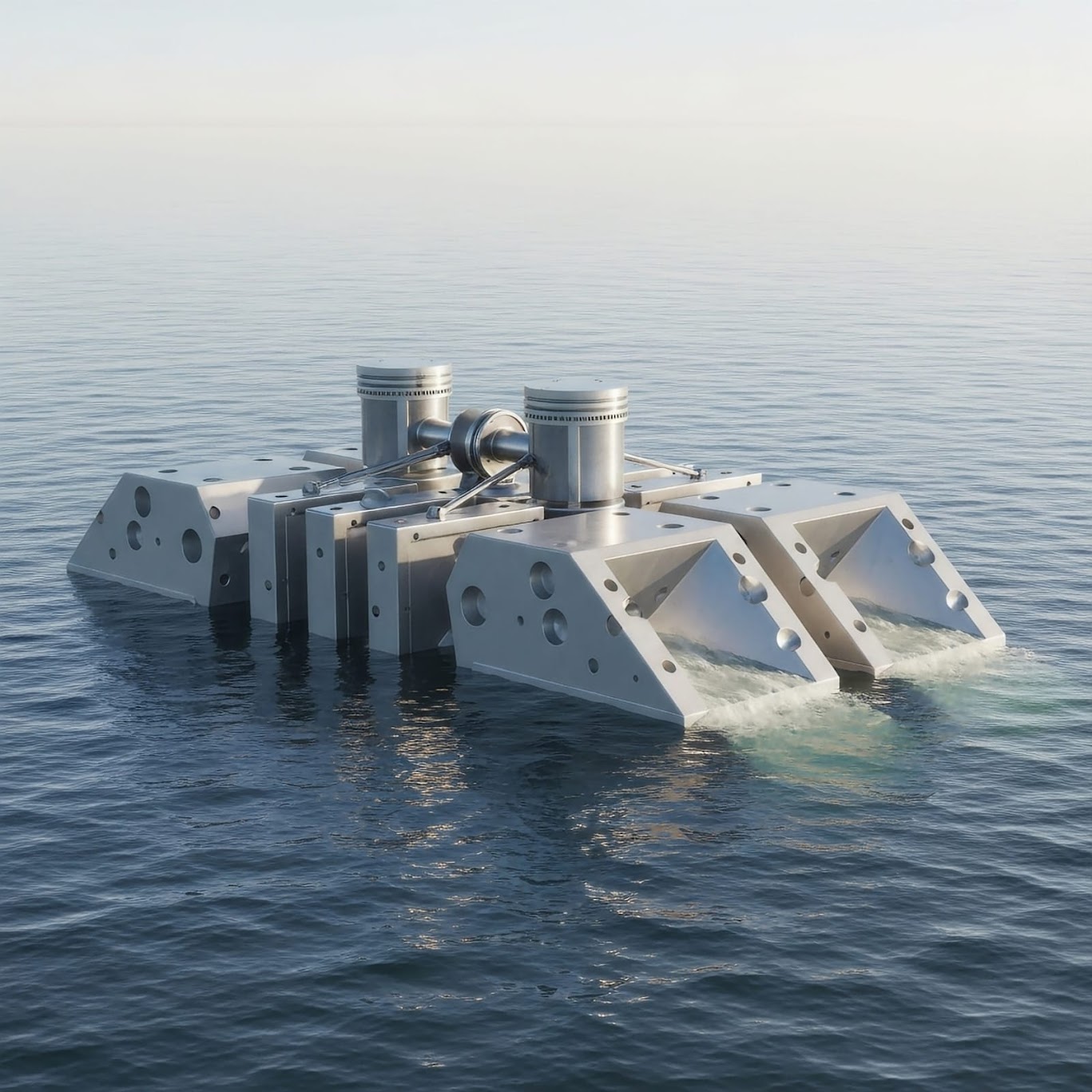
Strolling along the beach recently, I found myself pondering the potential of harnessing wave power for electricity generation. Envisioning a machine that harnesses the ebb and flow of waves, I pictured a system utilising linkages, pistons, and turbines to transpose this natural gravitational energy into electricity. Curious about visualising this concept, I turned to Google's Gemini Nano Banana (GenAI) tool to bring my idea to canvas. Observe this collaboration of human thought, artificial intelligence and nature below.
GenAIGeminiNanoBananaTidalPower
Bootstrap AGI
Question · GAN
Has anyone taken a foundation ML model and then used a Generative Adversarial Network (GAN) approach to manipulate / augment the original foundation model such that it both re-programmes itself in terms of the synapse structure as well as augmenting the original training data (or generating it) with the goal of producing what is humanly defined as “General Intelligence”? The idea being that AI “pulls itself up by its own bootstraps” to design and build its own General Intelligence Model.
AIAGIGANBootstrapAGI
Hamradio AI Enhanced Mode
Idea · DSP / weak signal
Is there such a thing as an AiDSP in ham radios? I'm thinking that such a radio would use AI to reconstruct sinewaves post ADC sampling (giving more dynamic range or overcoming Nyquist requirements) and to then also be used in the realm of signal demodulation that would use AI to “predict” what the missing information was. I've thought about this before in the context of FMDX and using AI to boost the reconstruction of PI codes based on the characteristics of the received transmitted signal and the RDS bitstream — whether that be an error-free bitstream or not — i.e. generative AI for radio signals and the subsequent demodulation of the audio and/or data.
Is it worth trying a bit of vibe coding to see if AI could write such a thing… (all feels a bit meta now)
As for creating the training dataset required to build such an AI model for say the decoding of SSB signals, you could take the English language dictionary, run it word-by-word through a speech synthesiser and then into a DSP SSB signal generator … so that you end up with a training set of data that has both the modulated SSB waveform along with the associated English language word. This new radio “AI enhanced” mode has the potential to be of particular use for aurora scatter (when speech is garbled), as well as weak signal work.
AiDSPhamradioFMDXGenAI
Aurora Meets Ironbridge Gorge: AI Creativity in Action
Experiment · image + video
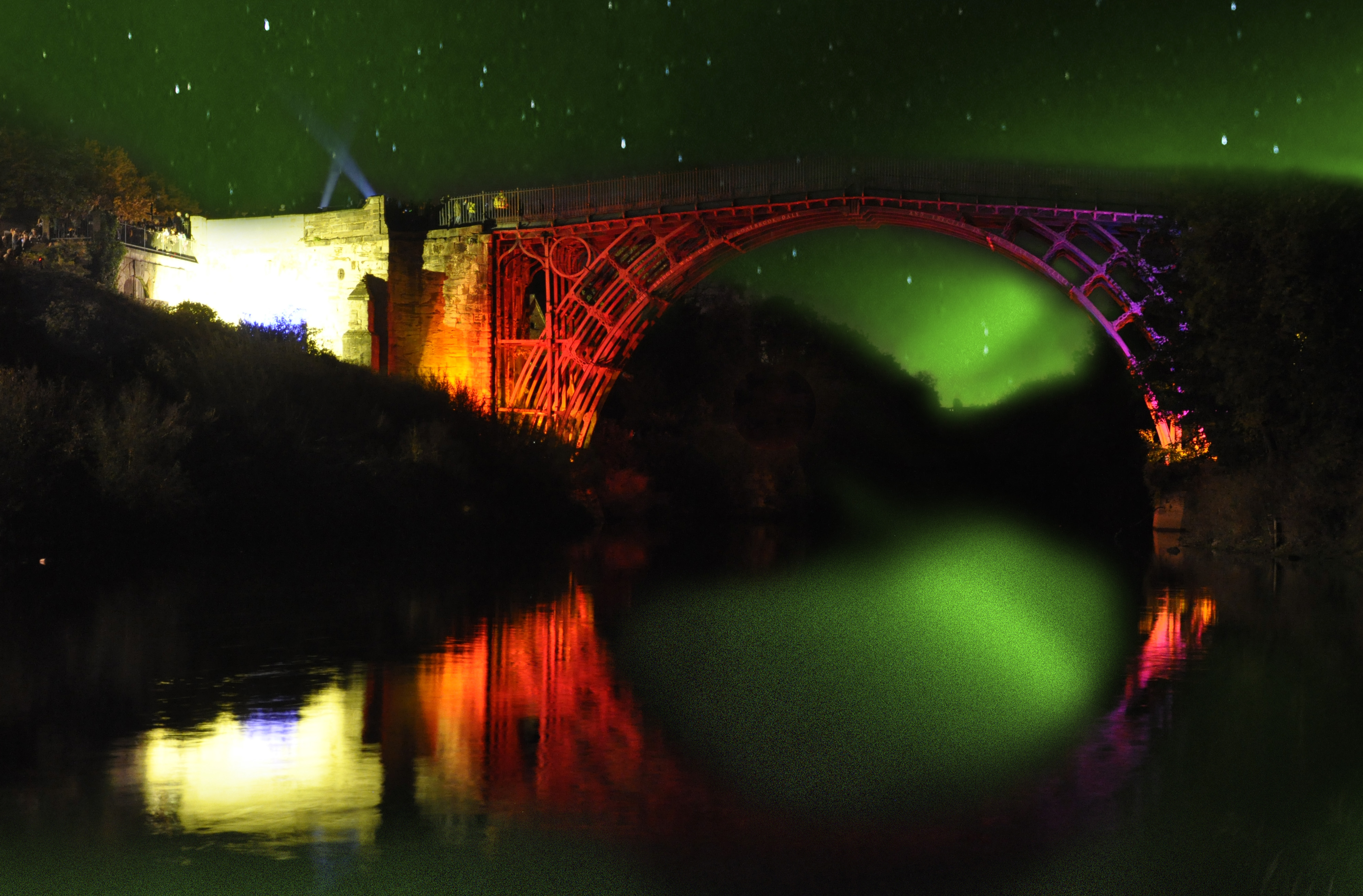
Blending art and technology. I created a unique image by combining my Aurora photo from Iceland with Ironbridge Gorge in Telford—two memories, fused in Photoshop. Using this as an AI test case, Grok 2 generated a stunning recreation (from a suitable GenAI prompt) that matched my vision. Taking it further, I animated the original static Photoshop image with Grok's Imagine AI video engine, bringing the photo-fused aurora to life over Ironbridge.
This experiment shows how GenAI can empower creativity—speeding up workflows, sparking new ideas, and making artistic innovation more accessible than ever.
AIartGenAIAuroraIronbridgeGorge
Prevent AI feedback (model breakdown)
Note · training data
When it comes to speaker systems, nobody enjoys the sound of feedback loops. The same goes for AI models. To prevent AI feedback (model breakdown), it's crucial to label all generative AI content appropriately as GeneratedByAI. This will provide AI foundation models with the ability to filter out AI-generated context from their training datasets, maintain input purity and improve overall performance.
GeneratedByAIAIPurityAITrainingData
My AI Rover
Build · Raspberry Pi AI camera
Check out my upgraded AI rover, now equipped with the latest Raspberry Pi AI camera. Watch it as it navigates and performs object detection in stunning realtime footage — up close and then from an aerial view:
Using AI to Forecast Tropo and SpE
Question · ham radio / weather
Has anybody thought about using AI to produce tropospheric forecasts and/or daily Sporadic-E probabilities, by training a machine learning model with past DX events joined to weather and solar datasets? And then predicting future conditions based on realtime data using space and earth weather forecast datasets?
This could then be plugged into a chatbot whereby you could prompt it with questions such as: “will there be DX today in Telford and can you draw me a map of the paths I could expect and the directions to point my beam with the times colour coded. Could you also setup some scheds for me with stations I have contacted before along the predicted paths using my online logbook?”
hamradiotroposphericSporadicETelford
GenAI Test Case
2024–2026 · Ironbridge + aurora
The following photo is an image I created in Photoshop to combine one of my Aurora photos from Iceland with an image I took a few years earlier, of the Ironbridge Gorge. I was motivated to create this image as it's become one of my AI test cases to demonstrate (or otherwise) how far AI image creation has developed.
At time of writing (2024) Artificial Intelligence still could not “create me a picture of the Ironbridge Gorge in Telford with the Aurora Borealis behind it” and look anything like the image above.
At the end of 2024 I’m happy to report that the Grok 2 AI model generated me an image which passed this test and produced a very aesthetically pleasing image of the Ironbridge Gorge in Telford, with the Aurora behind it. Nice!